The Gea School proposes itself as a training hub dedicated to the themes of Ecological and Environmental Justice. It is a project directed by Giuseppe De Marzo and promoted by the Gea Association.
We started the Gea School because we feel the need and urgency to cooperate also in our country to promote a culture that recognizes the relationship between social, environmental and ecological justice. A culture that concretely gives us the opportunity to face and defeat the systemic and structural crisis of the civilization paradigm, while allowing us to build a “cultural and political community of Earth and Hope”.
At the international level, for decades a theoretical and political awareness has matured on the need for a systemic approach to address the various problems raised by our life on Earth, apparently unrelated but in reality interdependent and related to each other: climate change, migration, economy, unemployment, exploitation of the Earth’s resources, pollution of the oceans, extinctions, attacks on biodiversity, social injustices. Unfortunately, our country still lacks an integral vision that brings together social, environmental and ecological justice.
Yet, as the Covid-19 pandemic has dramatically shown (a direct consequence of climate collapse and the reduction of biodiversity), today we are immersed in the most serious crisis in human history. Never in the past have we had to face multiple crises of a different nature at the same time: social, cultural, economic, migratory, financial, food, energy, industrial, climatic, environmental and ecological.
The categories used up to now are no longer sufficient to read the limits of our age, nor to rethink the development model that has guided us up to now. Representative democracies are struggling in the face of the ecological crisis and the classic recipes of traditional policies do not seem able to offer a way out, leaving more and more space for the virus of xenophobia and racism, fueled by the unprecedented growth of inequalities, on which far-right and criminal organizations are building their fortunes.
The Gea School was created to help fill this serious gap, organizing for the first time in our country a training course capable of addressing the various aspects of the crises affecting the planet and our lives in an integrated and systematic way. Because we are the Earth.
The work of reconstructing the categories, the analysis of the new problems that we face, the development of a new and effective vocabulary, the elaboration of a vision capable of overcoming the crisis of the system are essential elements to oppose the cultural hegemony built by liberal governance over the past 25 years.
Instead of stagnating in the lamentation of the political discourse, which limits itself to pointing the finger at what does not work, the Gea School chooses to build what does not yet exist. A construction “for”, and not “against”: for social equity, environmental sustainability and ecological justice.
The Gea School is aimed at young activists between 18 and 35 years old. It was designed to promote the culture and the need for integral ecology in the new generations. In particular, it is aimed at activists involved in some of the issues at the center of the training course: social rights, fair and structural work, recognition of the right to income, fight against organized crime, mutual aid and solidarity activities, fight against megaprojects impacting on territories, defense of common goods, street education, fight against early school leaving and promotion of the right to study, defense of the rights of migrants, widespread reception, ecological reconversion, rights of nature, etc.
The main objectives that the School has set itself are:
- Contribute to building a new Political Culture, which brings together Social,Environmental and Ecological Justice;
- Contribute to the construction of a new epistemology and a newlexiconforactivists who know how to take up the challenge of a “society on the move”;
- Provide the foundations for a new systemic political vision capableofovercoming the crisis, providing concrete solutions and countering the increasein social, environmental and ecological injustices;
- Provide tools to build social and political alliances that strengthen the autonomy of initiative in the territories on concrete objectives;
- Offer interpretations that allow the interpretation of complex problems in the area through the lens of the relationship between social, environmental and ecological justice.

The Gea School is directed by Giuseppe De Marzo and makes use of a scientific committee that collects some of the best knowledge, knowledge and experience in the world on the issues of Environmental Justice and Ecological Justice.
To ensure the quality and level of training, we have convened internationally renowned intellectuals who have been able to make both a theoretical contribution to the theme of integral ecology and a practical contribution to the concrete policies to be implemented in the area.
Is composed by

(Sorochuco, Perù, 1970) She is a Peruvian indigenous leader committed to the struggle against multinational extractive companies, for the defense and promotion of the right to food, health, and a healthy environment. Together with the Celendinas Luchadoras en Defensa de la Pachamama, she advances the thinking and practices of women fighting for their rights and those of Mother Earth in the Cajamarca region. Since 2011, she has resisted the Conga project of the multinational Yanacocha with her family and the entire community. For this, in 2016 she received the Goldman Environmental Prize, one of the most prestigious awards for environmental protection. Several documentaries about her commitment to Mother Earth have been released, including AGUAS DE ORO. The Story of Maxima Acuña Chaupe (2021) and Las Damas Azules. The Fight of Women for Access to Water (2018).

(Nigeria 1958) He is director of the ecological think-tank, Health of Mother Earth Foundation based in Benin City, Nigeria. He is a member of the steering committee of Oilwatch International and was president of Friends of the Earth International (2008-2012) and executive director of the Environmental Rights Action of Nigeria (1993-2013). He is also a member of the Action Research Network for a Wellbeing Economy in Africa. He received the Right Livelihood Award in 2010 and the Rafto Award in 2012. His books include We Thought it Was Oil, But It was Blood – Poetry (Kraft Books, 2002), I will Not Dance to Your Beat – Poetry (Kraft Books, 2011), To Cook a Continent – Destructive Extraction and the Climate Crisis in Africa (Pambazuka Press, 2012) and Oil Politics – Echoes of Ecological War (Daraja Press, 2016).
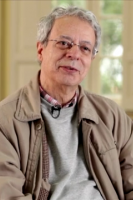
(Belo Horizonte, 1944) Carlos Alberto Libânio Christo, known as Frei Betto is a Brazilian theologian and one of the leading exponents of liberation theology. Priest of the Dominican Order. Progressive writer who supported liberation movements in Latin America. He has, among other awards, the Juca Pato Prize for his book Fidel y la Religion; the Medal of Solidarity, from the Government of Cuba; the Paulo Freire Trophy of Social Commitment (2000), the recognition of the Brazilian Psychological Councils and the ALBA Award for Letters in recognition of his literary work as a whole. Among his numerous writings we find: That man called Jesus (EMI, 201), There is no progress without happiness (Rizzoli, 2004), Mysticism and spirituality with Leonardo Boff (Cittadella, 1995) and Prayer in action. Contribution to a spirituality of liberation (EDB, 1980).

(Cotacachi, Ecuador, 1955) She is a recognized indigenous leader, founder of the Confederation of Kichua Peoples of Ecuador (Ecuarunari), of which she chairs the Political Council, and of the Confederation of Indigenous Nationalities of Ecuador (Conaie). In the course of your social activity, she have promoted cultural diversity understood as a meeting of different, inclusive ways of life and on equal terms for all. She advocates the claims and aspirations of indigenous women and works for their recognition. In 2006 she was nominated for the Prince of Asturias Prize in Spain, considering her a historical leader who contributed to the strengthening of democracy, the defense and the exercise of human and collective rights. Her autobiography entitled Blanca Chancosa – The threads with which I woven my story has been published (Habya Yala, 2021).
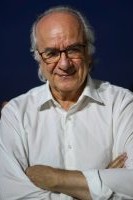
(Coimbra 1940) Portuguese sociologist among the founders of the World Social Forum, he is scientific director of the Center for Social Studies of Coimbra. Professor Emeritus of the Faculty of Economics at the University of Coimbra, he is also the Distinguished Legal Scholar of the Faculty of Law at the University of WisconsinMadison and the Global Legal Scholar of the University of Warwick. He has published various books on the processes of globalization, law and justice, democracy and human rights, which have been translated into Spanish, English, French, German, Chinese and Romanian. His most famous books translated into Italian are The end of the cognitive empire (Castelvecchi, 2021), The cruel pedagogy of the virus (Castelvecchi, 2020) and Sinister from around the world, unite! (Castelvecchi, 2018).

(St. James, Louisiana 1950) A public school special education teacher, in October 2018 she founded RISE St. James, a grassroots, faith-based environmental organization. She successfully blocked the construction of a $1.25 billion plastics manufacturing plant along the Mississippi River. Lavigne mobilized grassroots opposition to the project, educated local residents, and organized peaceful protests to defend the predominantly African-American community. The plant would have generated 500,000 pounds of hazardous liquid waste annually in a region already struggling with known carcinogens and toxic air pollution. For her work with her community, in 2021 she received the Goldman Environmental Prize, one of the most prestigious awards for environmental protection, in 2022 she was awarded the Laetare Medal of the University of Notre Dame, in 2023 she was listed among the most influential climate leaders according to TIME 100, and in 2024 among the 100 most influential people in the world. The activists of Rise St. James were collectively included in the 2024 Independent Climate 100 List.

(Mumbai 1954) Indian scientist and social activist who founded the Narmada Bachao Andolan, a campaign to demand justice for the rights of people displaced by dams on the Narmada River. The primary focus of the NBA was to provide information about the project and legal representation to interested residents of the Narmada Valley. In 1996 he founded the National Alliance of Popular Movements (NAPM), an agglomeration of progressive social organizations opposed to the policies of
globalization. Representative of the World Commission on Dams, the first independent global advisory body on water, energy and dam alternatives. His work is recognized around the world and in 1992 he received the 1992 Goldman Environment Award. Her commitment was described in the book The Lady of Narmada by Marina Forti (Feltrinelli, 2004).

(Monaco di Baviera, 1946) Environmentalist and theorist of overcoming the logic of development, he is a social scientist who worked for many years at the Wuppertal Institute for climate, environment and energy. For 9 years he was President of Greenpeace Germany and taught at Schumacher College and the University of Kassel. He has published numerous essays on the theme of the environment and social justice, on the limits of globalization and on the contemporary economy. In Italy, the following have already been published, among others: Environment and social justice. The limits of globalization (2001), For a fair future. Resource conflicts and global justice (2007) and Sustainable future: eco-social responses to the crisis in Europe (2011).

(Dehradun, India 1952) Quantum physics and militant environmental economist, known thanks to the success of Monoculture della mente (Bollati Boringhieri, 1995), a best-seller all over the world. She have fought to change practices and paradigms in agriculture and food; intellectual property rights, biodiversity, bioethics, social, economic and geopolitical implications related to the use of biotechnology, genetic engineering and more. In 1991 she founded Navdanya (in Hindi “nine seeds”), a movement centered on the Earth, on women and led by farmers for the protection of biological and cultural diversity. Shiva is a consultant for agricultural policies to numerous governments in Asia and Europe (including the Tuscany region). You are among the main leaders of the International Forum on Globalization. In 1993 she received the Right Livelihood Award.
The teachers friends of Gea

(Roma, 1978) Philosopher and essayist, he is official for the political issues of the Dicastery for Integral Human Development. He is a lecturer in political philosophy, a researcher in modern and contemporary history and as a journalist he keeps a videoblog on the «Huffington Post». He founded «Sintesi Dialettica» in 2007, with Lorenzo Diurni and sixty other researchers. Among his books: It is not a country for the laity (Bollati Boringhieri 2020); For a new humanism, co-authored with L. Ciotti (Solferino – Corriere della Sera 2019); Dirty bread (preface by G. Pignatone, Rizzoli 2018); Corrosion, dialogue with Peter Turkson (prefaced by Pope Francis, Rizzoli 2017); The Jesuit Pope (Mondadori 2014); The concept of peace (LEV 2013); New humanism, new secularism (LUP 2012); DC and terrorism (Rubbettino-Istituto L. Sturzo 2008).

(1966) Environmental historian, currently Research Director of the CNR-ISMed and director of the Environmental Humanities Laboratory of the Royal Institute of Technology in Stockholm. Before moving to Sweden he carried out research activities at Yale University, the University of California at Berkeley, Stanford University, the Autonomous University of Barcelona, the Center for Social Studies of the University of Coimbra. He has dealt with forest resources in the nineteenth and twentieth centuries, commons and privatizations, fishing communities and traditional knowledge, social movements, environmental justice and waste, migration and ecological changes, showing an irresistible attraction for those who rebel or resist, for those who pay the price for the progress of others, for those stories that no one wants to tell. In Italian he has published about forty essays and several volumes. Among his publications: History of the environment. An introduction (2004, with Stefania Barca) and The mountains of the homeland. Nature and nation in the history of Italy: 19th and 20th centuries (2013).

(Torino 1954) Statistician and economist, he is today coordinator of the Inequalities and Diversity Forum, together with Andrea Morniroli. He was a research manager at the Bank of Italy, responsible for macroeconomic forecasts, business surveys and study projects on corporate ownership structures and Head of the Public Policy for Development Department in the Ministry of Economy and Finance. As chairman of the OECD Committee for Territorial Policies and advisor to the European Commission, he coordinated public administrators and scholars in the design of a new method of intervention for the less developed territories: the “place-based approach”. This experience led him to become Minister for Territorial Cohesion in the Monti Government of national emergency 2011-2013. He made a proposal to reform the organization of parties: “Ideal places”. He has taught in Italian and French universities and is the author of many essays and volumes including: The italian capitalism. History of a compromise without reforms (Donzelli, 1999), The Case for Regional Development Intervention. Place-Based versus Place-Neutral Approaches (Journal of Regional Science, 2012 with P. McCann and A. Rodriguez-Pose), The Crossing. A new idea of party and government (Feltrinelli, 2013), Change course. More social justice for the relaunch of Italy (Laterza, 2019).

(Bari 1973) Director of Gea school and founder of the association, De Marzo is an activist, economist, journalist and writer who has worked for years in social networks and movements in Italy and Latin America alongside the people and organizations indigenous, labor and rural. In 2003 he founded A Sud – Onlus ecology and cooperation, and in 2007 the first Documentation Center on Environmental Conflicts. In 2011 he was one of the coordinators of the campaign for public water and against nuclear power. In Italy working in the associations Libera contro le mafie and Gruppo Abele. Since 2017 he has been the national coordinator of the network of Numeri Pari (Equal numbers). Published Radical Choc (Castelvecchi, 2020), For Love of the Earth (Castelvecchi, 2019), So goes the world, with Gianni Minà (Edizioni Abele, 2017), Anatomy of a Revolution (Castelvecchi, 2012), Buen Vivir. For a new democracy of the Earth (EDS, 2009), Blood of the Earth – the first oil Geographical Atlas in the Ecuadorian Amazon (Derive e approdi 2006), From Seattle to Porto Alegre (Scheiwiller, 2002). He was among the coordinators of the various World Social Forums and meetings of international popular movements.

(Roma) A Roman journalist, she is the director of the Italian Observatory on International Trade and Climate (Fairwatch). She is a senior expert in advocacy, international trade, and solidarity economies, and has taught Economic Development Models at the Pontifical Gregorian University and Advocacy and Social Communication Techniques at the Executive Master’s program at Luiss Guido Carli University. She is one of the coordinators of the G7/G20 civil society working groups on finance, trade, and employment (Civil 7/20) and a member of the Ministry of Foreign Affairs’ National Council for Development Cooperation, representing the Association of Italian NGOs, of which she is president of the Board of Guarantors. Her books include: In the Hands of the Markets. Why TTIP Must Be Stopped (EMI, 2015); The Lords of the Green Economy. Green-Tinted Neocapitalism and Glocal Resistance Movements (EMI, 2013); and WTO. From Market Dictatorship to World Democracy (EMI, 2005).

(Verona 1961) A journalist and writer, she is an expert in international cooperation and the right to health. In Italy, she coordinated the Campaign to Ban Landmines and then directed Doctors Without Borders. She continued to collaborate with MSF at the international office in Geneva, where she later served as policy and advocacy manager for the Drugs for Neglected Diseases Initiative (DNDi), and then as a consultant to the World Health Organization (Department of Essential Medicines). From 2013 to 2019, she was a member of the board of Banca Popolare Etica and vice president of the Fondazione Finanza Etica. She currently directs the Global Health Justice program at the Society for International Development (SID) and is co-president of the Geneva Global Health Hub (G2H2), an independent platform of 50 international civil society organizations committed to the right to health. Among her latest publications: WHO and the Right to Health: What Future (My Book, 2015), Rich and Good? The Dark Plots of Philanthrocapitalism (EMI, 2020), The World Needs Healthy Commons, Development Journal 63 (Springer, 2020), Geopolitics of Health: Covid-19, WHO and the Health Challenge (Rubbettino, 2021).

Attivista per l’affermazione dei diritti degli animali e Presidente della LAV – Lega Anti Vivisezione. Ha ideato e condotto con tante altre persone le campagne, fra le altre, che hanno portato all’approvazione di Leggi nazionali come quella contro i maltrattamenti e l’abolizione degli allevamenti per la produzione di pellicce, e Direttive europee come quella che ha fermato la sperimentazione sugli animali per i cosmetici. È stato docente sui diritti degli animali del Master di “Etologia applicata e benessere animale” della Facoltà di Medicina Veterinaria dell’Università di Bologna e del Corso elettivo “Animali e scienza medica” della Facoltà di Medicina e Chirurgia. Nel 2003 ha ricevuto dalla britannica Royal Society for the Prevention of Cruelty to Animals il “Michael Kay Award”. È giornalista pubblicista, cofondatore dell’Associazione Italiana Giornalisti Ambientalisti. Ha scritto dossier come L’uomo è il miglior amico del cane (2004), Mici amici (2004) e libri come Animali, non bestie. Tutelare i diritti, denunciare i maltrattamenti (Edizioni Ambiente, 2004) e Oltre il filo spinato di Green Hill. La vivisezione esiste ancora. Come e perché superarla (Edizioni Sonda, 2016).

(Paruzzaro 1946) Graduated in foreign languages and literature, politics, journalist and environmentalist. In 1973 she was one of the founders of “Effe”, the first feminist magazine in Italy, which she also directed from 1976 to 1978. Editor of the ANSA news agency since 1977, also as correspondent from Brussels, she collaborated with Globe, Panorama, The Republic, Nature Today, Oasis and The New Ecology. She was a correspondent from Rome for the magazine Irone. In 1990 she conducted the television program Geo. Elected to the National Council of the WWF in 1986 and a candidate for the Greens in Naples the following year, since 1989 she has directed the WWF monthly “Panda”. In the same year she was again a candidate with the Greens for the European elections. President of WWF Italy from 1992 to 1998, in 1994 she also joined the international WWF Council. From May 2003 to May 2006, was elected Female Spokesperson of the European Greens. From July 2003 to February 2006 she was Municipal Councilor of Villa San Giovanni (Calabria). She was elected Deputy of the Italian Parliament in April 2006. Grazia Francescato has published several books, including “Poisoned Planet” (La Nuova Italia, 1977).

(Napoli 1936) Vice President emeritus of the Constitutional Court. Constitutional judge since July 2002, after a long career in which he combined study and research activities in the fields of Roman, administrative, constitutional and environmental law with the functions of accounting magistrate, culminating in the appointment of the President of the Court of Auditors. At the Court of Auditors, after a long period spent at the General Prosecutor’s Office, in the last period, from 1995, he was the Regional Prosecutor of Lazio. He was part of the Ecology and Territory group set up at the Supreme Court of Cassation, was Head of Cabinet at the Ministry of Education and Head of Legislative Office at the Ministry of the Environment. Among his main studies stand out The territory, a common good of Italians, is worth mentioning. Collective property, private property and public interest (Donzelli, 2014), administrative liability, public damage and environmental protection (Maggioli, 1985) and public environmental damage (Maggioli, 1990).

(Torino 1966) Meteorologist, climatologist, and science communicator, he chairs the Italian Meteorological Society. In 1993, he founded the journal Nimbus, of which he is now editor-in-chief. The history of Alpine climate and glaciers is his primary research focus, but he also studies environmental and energy issues. He is director of the Meteorological Observatory of the Real Collegio Carlo Alberto in Moncalieri and teaches at various universities. He is a member of the scientific committee of ASPO Italia, an association for the study of peak oil, and studies its serious consequences on ecological, economic, and social systems, and the mitigation of these effects. His publications include: Climbing the Mountains. Gaining Altitude to Escape Global Warming (Einaudi, 2020), There’s No More Time. How to Respond to Environmental Alarms (Einaudi, 2020), The Changing Climate. Why Global Warming Is a Real Problem, and How to Stop It (Rizzoli, 2019), Let’s Get Ready. A plan to save us (Chiarelettere, 2011).

(Florence, 1971) An art historian, he is the rector of the University for Foreigners of Siena. He has always studied 17th-century art history, seeking to answer the questions posed by works using all the tools of the discipline: from attributive philology to documentary research, from textual source criticism to the analysis of meanings, to a historical-social interpretation. His publications include: Eclipse of the Constitution. The Draghi Government and Democracy (Chiarelettere, 2022), The Vanquished. The Body in the History of Art (Solferino, 2022), Heretics (PaperFIRST, 2020), The Art Hour (Einaudi, 2019), and The Unfinished Constitution. Art, Landscape, Environment (Einaudi, 2013).

(Rome, 1974) Ecologist, vice-president of the Commission for the Environment, Territory and Public Works of Montecitorio, member of the Parliamentary Commission of Inquiry into illegal activities connected to the waste cycle and related environmental offenses and of the Commission. She arrived in Legambiente in 1996 as voluntary, to then become General Director and then National President from 2015 to 2017. Sociologist, expert in the themes of environmental sustainability in the tourism and organization of territorial services, she has contributed to numerous association publications. She is part of the presidency office of Green Italia, of the Inequalities and Diversity Forum and is one of the guarantors of the Mediterranean collective humanitarian mission and one of the promoters of the Le Contemporanee association.

(Bologna 1958) Essayist and writer, for years she has been dealing with racism and totalitarianisms of the twentieth century, with particular attention to the testimony of dictatorships and to the practices of female resistance to regimes. Among his books: Like a frog in winter. Conversations with three Auschwitz survivors (Bompiani, 2004); The crazy ones. A meeting with the Mothers of Plaza de Mayo (Bompiani, 2005); Racism and noism. The declinations of us and the exclusion of the other (Einaudi 2013). He has made documentaries and reportages, including Via Lecco 9 (RaiNews24), Le Madri di Plaza de Mayo (Rai3 – DocTre), The Shoah of women (Rai3 – DocTre) and From the racial laws to the Shoah (Rai3 – La grande storia). He has conducted in-depth journalistic and cultural broadcasts for Radio1 Rai – including numerous cycles of Tonight your voice and has collaborated in the production of Rai Educational broadcasts. She is director of the Laudato si ‘association and one of the founding members of the Rights and Borders Association (Adif).
Ethics and costs
All the people who contribute to the realization of the Gea School (teachers, members of the steering committee, the school director and the staff members) carry out their work completely voluntarily and free of charge, with the sole aim of promoting the promotion of a ethics of the Earth and the principles of Integral Ecology among the younger generations.